Hillside homes south of Ventura: what the hill gives you, and what to check.
Everyone in LA says "the Valley" like it is one place. It is not. South of Ventura Boulevard, in the hills, is its own market with its own rules. Here are the ones that matter.
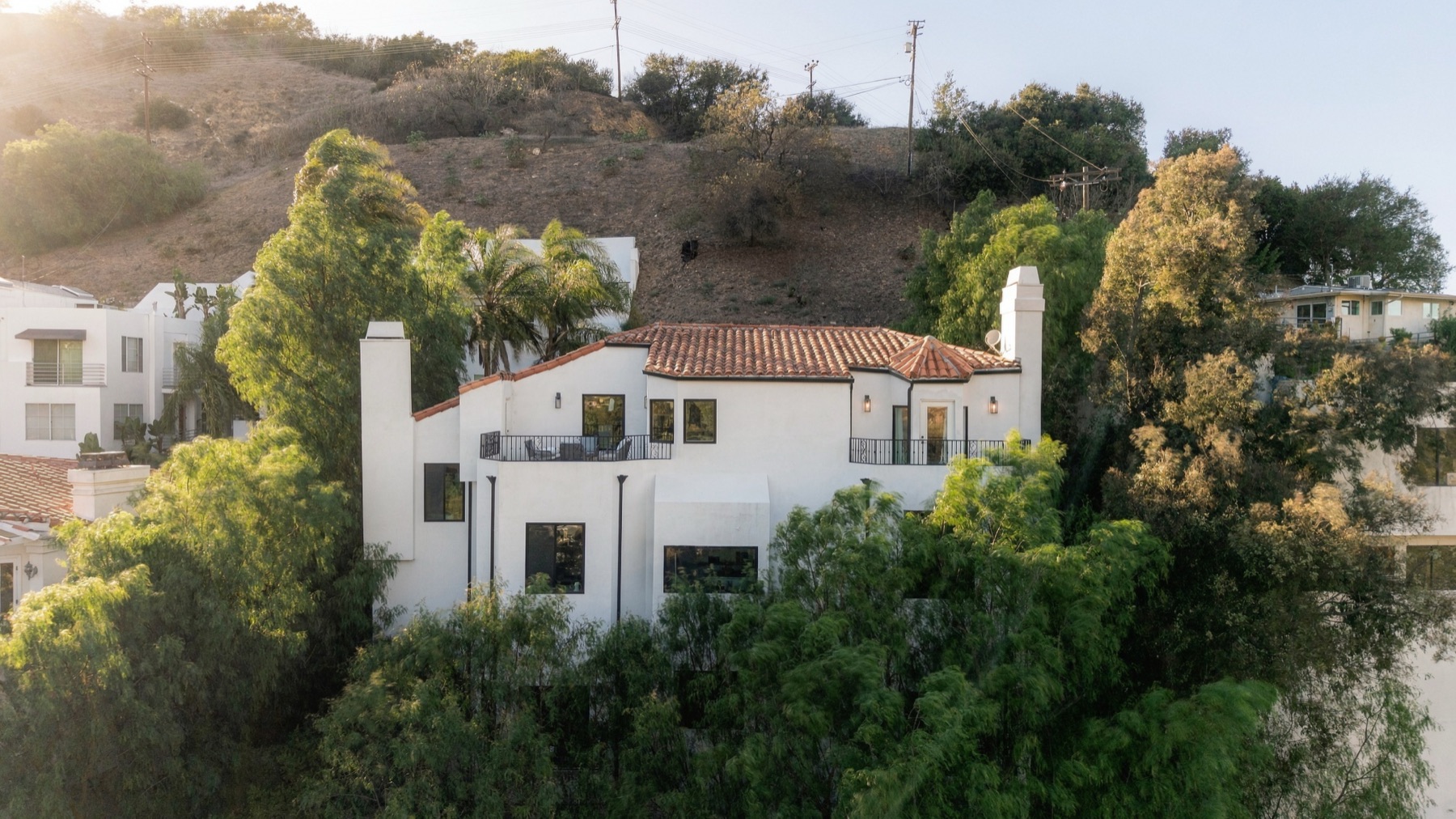
Draw a line along Ventura Boulevard from Studio City through Sherman Oaks to Encino. North of it is the Valley floor: flat lots, the grid, the big backyards. South of it the land tilts up into the Santa Monica Mountains, and the whole pricing logic changes. I sell on both sides. The hills are the side people ask me about, so here is the honest version.
Why the hills cost what they cost
Three reasons, and they stack.
Supply. There is no more hillside. Every buildable lot south of Ventura was mostly spoken for by the 1990s, and the city's Baseline Hillside Ordinance has made building new ones slow and expensive since 2011. The flat Valley can always add a few more houses. The hills cannot.
Views and privacy. A canyon street gives you trees in the windows instead of a neighbor's fence, and a view of the Valley lights that no flat lot can buy at any price.
Access. The canyon roads, Coldwater, Laurel, Beverly Glen, are the shortcuts over the hill. A house on the Coldwater side of Studio City is about ten minutes from Beverly Hills on a good morning. The flat Valley is not.
What a multi-level house actually gives you
Here is the thing that confuses buyers coming from flat lots. A hillside lot is often smaller on paper than a Valley-floor lot, sometimes much smaller. So the house goes up instead of out, and a 6,000 square foot lot can carry a 4,800 square foot home across three or four levels.
That is not a compromise. It is the feature. Every level gets its own light and its own quiet. The living spaces sit on one floor, the primary suite on another, a theater or a lower bedroom level below that. Nobody is on top of anybody. And because the hill falls away behind the house, every level gets a view instead of a wall.
On a flat lot you pay for dirt you cannot build on. On a hillside lot you pay for the house. For a lot of people, that is the better trade.
The five things to check
None of this is a reason to avoid the hills. All of it is a reason to buy and sell them with your eyes open. I am an agent, not an inspector or an engineer, so take these as questions to ask the right professional, not as advice.
- The lot and the retaining walls. Ask for a survey if there is any doubt where the lot lines run, and have an inspector look at every retaining wall, drain, and slope. On a hill, water management is the whole game.
- Permits on the levels. Multi-level hillside homes get added onto. Pull the permit history from the city and make sure the square footage you are paying for is square footage the city knows about.
- Insurance. Hillside and canyon homes can sit in brush zones. Get an insurance quote during your contingency period, not after. It changes the monthly number.
- Parking and the street. Private and narrow streets are part of the charm and part of the logistics. A three-car garage on a hillside street is worth more than it would be on the flats, because street parking is not a given.
- The sun. A south-facing hillside and a north-facing one are different houses. Visit at the time of day you actually live, not just at the open house.
If you are selling one
Hillside homes sell on the thing flat-lot homes cannot offer, so the marketing has to show it: the view, the levels, the canyon, the three minutes to the Boulevard. Twelve photos and a paragraph do not do that. A film, a map, and a story do. If you own in these hills and want to know what your place is really worth right now, not a Zestimate, the honest version, text me. I would rather tell you the truth than win you with a fantasy.
3646 Potosi Avenue is a hillside Mediterranean on a private street above Coldwater Canyon. 4,784 square feet across four levels on a 6,238 square foot lot, which is exactly the math this article is about. Offered at $1,998,000. Tour it on the listing site.
More from the hill
Coldwater and Ventura: the corner that made Studio City Wilacre, Fryman, and TreePeople: the three trailheads above Studio City